
SuraMed (AI Radiology)
SuraMed is an AI radiology company built for the Arab world, focused on developing advanced clinical imaging tools tailored to hospitals, clinics, and radiology centres across …
•
1 min read
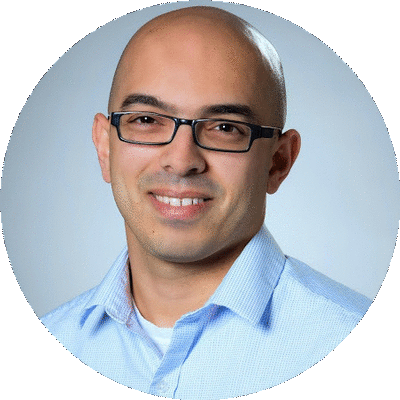
Mohammed Khalilia (محمد عبد الستار قاسم) is a researcher, computer scientist, and data scientist with a PhD in Computer Science from the University of Missouri. Following his doctorate, he joined Georgia Tech’s Computational Science and Engineering school and Emory University as a Postdoctoral Fellow, where his research spanned predictive modeling, relational cluster analysis, and health and nursing informatics.
He then spent nearly five years at Amazon, working across Amazon Web Services (AWS) and Amazon Studios in natural language processing (NLP), speech synthesis, and computer vision. In 2018, he was part of the team that launched Comprehend Medical, Amazon’s NLP service for clinical and biomedical text. At Qualtrics, he developed the company’s first fine-tuned large language model, trained synthetic sampling model, and worked on conversational machine learning, and active learning.
He is also an adjunct professor at Birzeit University, where he teaches NLP courses for doctoral students.
PhD Computer Science
2007-01-01
2014-05-15
University of Missouri-Columbia • USA
BS Computer Science
2001-08-31
2006-12-31
University of Missouri-Columbia • USA
SuraMed is an AI radiology company built for the Arab world, focused on developing advanced clinical imaging tools tailored to hospitals, clinics, and radiology centres across …

Recruiting the right participants for a study can be difficult. You may not get the exact demographics you need, and the shorter the deadline, the less sure you can be that …

Customers own their data, and while a data use agreement permits the use of anonymized data, raw data cannot be used for model training. The anonymization tools are rule-based, …

Insights Explorer is an AI-powered text analytics tool that uses your open-ended feedback to identify top themes, create headlines, and generate helpful summaries. This feature can …
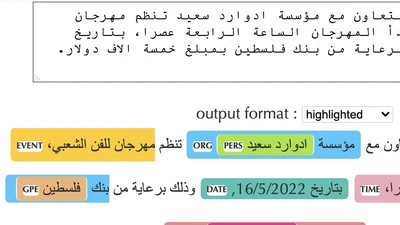
Wojood consists of about 550K tokens (MSA and dialect) that are manually annotated with 21 entity types (e.g., person, organization, location, event, date, etc). It covers multiple …

Amazon Comprehend Medical is a HIPAA-eligible natural language processing (NLP) service that uses machine learning that has been pre-trained to understand and extract health data …
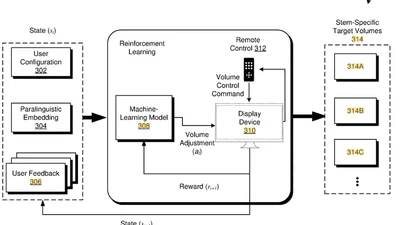
Systems, devices, and methods are provided for multi-stem volume equalization, wherein the volume levels of each stem may be adjusted non-uniformly. Audio may be diarized into a …
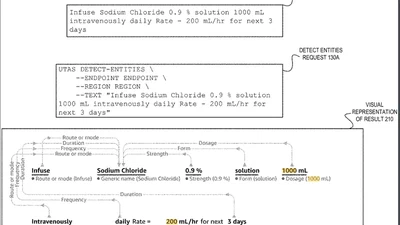
Techniques for entity and relationship detect from unstructured text as a service are described. A service may receive a request to identify entities within a provided unstructured …
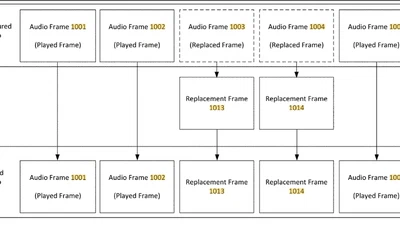
Played audio frames included in first audio content may be received over one or more networks. The first audio content may further include a replaced audio frame. The first audio …
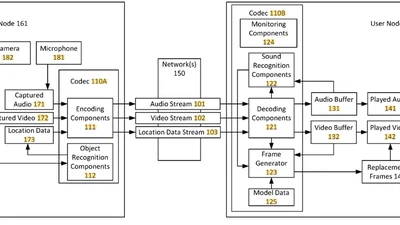
The popularity of videoconferencing has increased rap idly in recent years. Video conferencing tools may allow multiple people at multiple different locations to interact by …
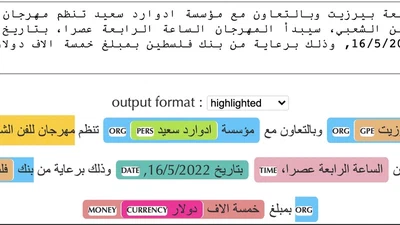
This paper presents Wojood, a corpus for Arabic nested Named Entity Recognition (NER). Nested entities occur when one entity mention is embedded inside another entity mention. …
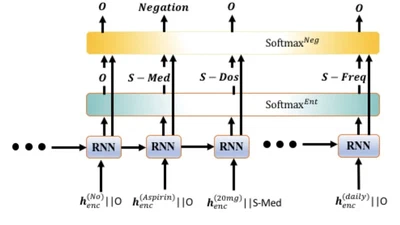
Negative medical findings are prevalent in clinical reports, yet discriminating them from positive findings remains a challenging task for in-formation extraction. Most of the …